Moqueca: coastal Brazil in a clay pot
Coconut milk, dendê oil and coriander. Why moqueca tastes of the sea without tasting fishy.
1 min read
Dish Guides
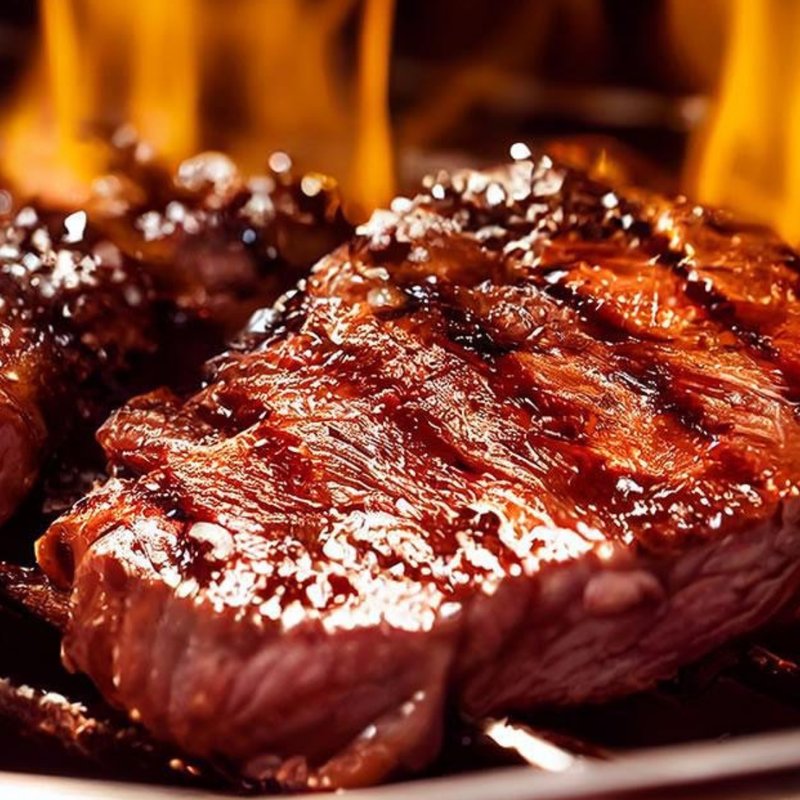
If you walk into a Brazilian restaurant and ask what to order, the answer will almost always be picanha. It is not a marketing choice. It is the cut Brazilian churrasco was built around, and for most Brazilians it is the taste of a Sunday with the family.
It is also the cut most first-time visitors have never heard of — because in the United States it is usually broken down into other things before it ever reaches a menu.
Picanha is the sirloin cap — the triangular muscle sitting on top of the rump, known in the US as the rump cap or coulotte. It is a small cut: a whole picanha weighs somewhere between two and three pounds, which is why a single one is usually shared.
What matters more than the muscle is what sits on it. Picanha comes with a thick, even layer of fat still attached, and in Brazil that layer is never trimmed. Remove it and you have a decent piece of sirloin. Leave it on and you have picanha.
Over the flame, the fat cap renders slowly and bastes the meat from above as it goes. The muscle underneath stays juicy without needing marinade, butter or sauce — which is exactly why the traditional seasoning is nothing but coarse salt.
“In Brazil, picanha gets salt and fire. Anything else on it is a sign somebody did not trust the cut.”
That is also why picanha is served in thick slices rather than thin steaks. A thin cut loses the gradient — the crisp, salty edge giving way to a soft pink centre — that the fat cap creates in the first place.
There are two traditional approaches, and both start with salt and end at the table:
Either way, nothing is portioned before it is cooked. The cut goes on whole and is sliced when it comes off, which is the part that surprises people most the first time they see it.
A picanha plate in Brazil rarely arrives alone. The standard companions are:
Salted coarsely, grilled whole over open flame, sliced at your table with farofa, rice and vinaigrette. Serves two.
A few things worth knowing before you order it for the first time:
Not quite. Picanha is the cap that sits on top of the sirloin — a separate muscle with its own fat layer. Regular sirloin is the larger muscle underneath, and it is leaner and firmer.
A ribeye carries its fat marbled through the muscle. Picanha carries it as a single cap on the outside. The result is a cleaner beef flavour with a crisp, salty edge rather than an evenly rich bite.
No. In Brazil it is served with coarse salt only, plus vinaigrette and farofa on the side. The rendered fat does the work a sauce would otherwise do.
We serve Picanha na Brasa at Boteco Restaurant, 5135 International Drive, Suite 12 — minutes from Orlando Premium Outlets. It is grilled whole and sliced at your table.
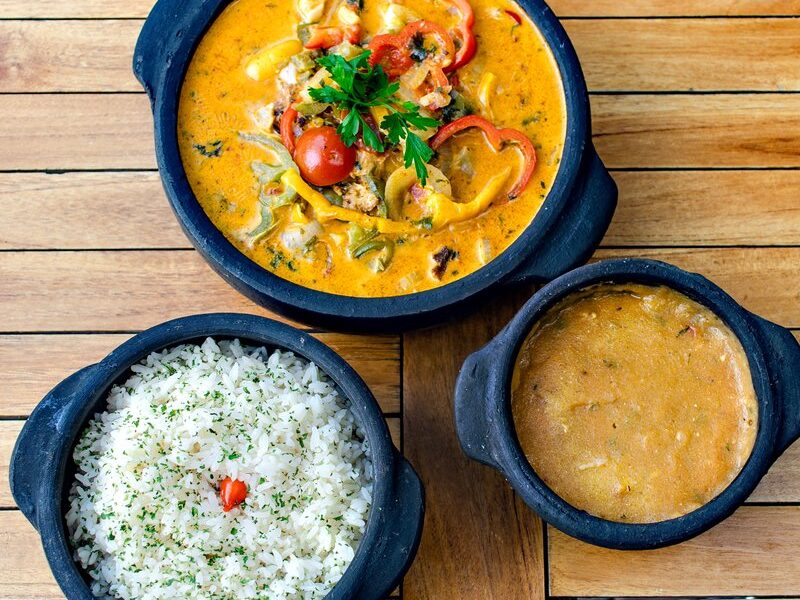
Coconut milk, dendê oil and coriander. Why moqueca tastes of the sea without tasting fishy.
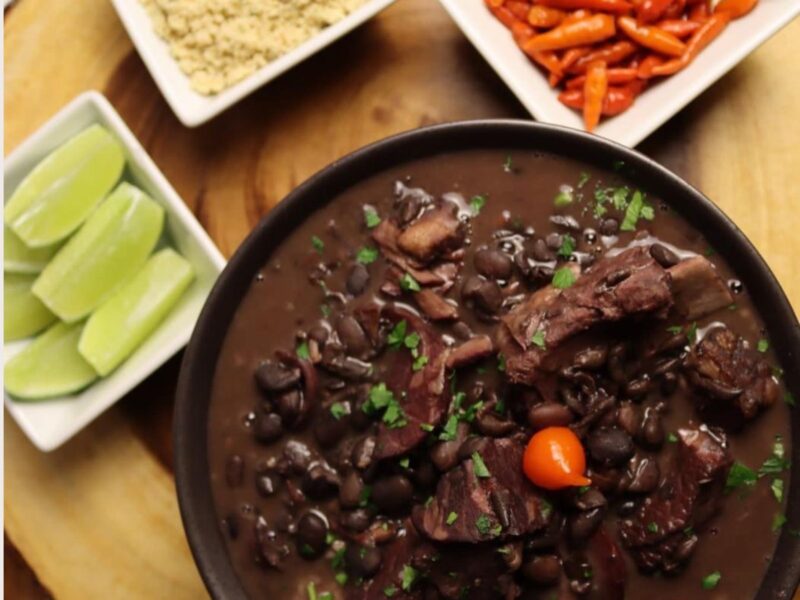
Black beans, select cuts of pork, and time you cannot shorten. What goes in it and what belongs beside it.
Picanha na Brasa, grilled whole and sliced at your table.